CloudCall API – the new way to build Comms Apps

During the last year, I have been working on a start-up called SYNETY which has developed a telecoms web service called the CloudCall API.

Building customised IVR, Outbound voice applications or Hosted PBX services  is currently an expensive proposition. Traditionally, you needed to purchase an IVR platform (software and hardware) then install either on-premise or host in a carrier’s data-centre, plug in E1 trunks and then build and test your application. As you grew, you would be constrained by the trunk capacity of your IVR equipment and as time went on, your application and IVR equipment would become out of date. Any idea how bad text to speech (TTS) or Voice recognition technology was just 3 years ago ?

CloudCall_Platform2011

Now there is a new way to build, test, deploy and scale your IVR or outbound communications applications – the SYNETY CloudCall API.

More information is available at www.cloudcall.com

SYNETY will be officially openening its doors for business on January 3rd.

SYNETY, Convergence and Unified Communications for SMEs.

Working in both Telecoms and Internet businesses for the last 16 years has given me a useful insight into convergence and the emergence of Unified Communications. 
cloud-scene.png

For me it all started in 1998 whilst I was 3 years into running my first ISP.  The initial emergence of Voice over IP technology was definitely too early. Then there was instant messaging and following closely was early software video conferencing, all bleeding edge technology, mostly unreliable but an indication of things to come.

As convergence of telecommunications and IT continued to progress through the noughties we started to see and hear the ramifications of this, from acquisitions of businesses to share value being slashed off public companies deemed to be on the back foot of these changes.

I know many telecoms reseller businesses that have been told they dead or dying if they do not embrace Unified Communications (posh name for converged communications) with this Software Company or that.

Indeed I’m guilty of this myself having been wrapped up so tightly inside an Eco-system that every fiber of me believed that UC was the life raft to every business in a recession and was truly bewildered by any business rejecting it.

It is true that some Unified Communications platforms like Microsoft Lync can help improve communications and bolster collaboration in certain multi-site businesses; the benefit really depends on the type, size and business culture.

Even though it may seem so, I’m not trying poo-poo Unified Communications or Microsoft Lync. I still believe it can be transformative for businesses in many circumstances but in my previous role I was focused solely on medium and large businesses but not any-more.  Now I’m back to my grass roots – focusing on startups and SMEs.

During the planning and preparation stages of our new business I’ve spent time talking to various small and medium sized businesses – from start-ups to 50 person businesses. I needed to find out exactly what SMEs really need from their communications in order to ratify our business strategy and generally get closer to the types of customer we will be supplying services.

I was surprised to find that many smaller businesses I interviewed have neither the technical capability nor the need to take full advantage of many of the features that this emerging technology offers. They don’t need to see people’s presence – they can just look over their desk. They don’t need desktop sharing – they can pull a chair up at someone else’s desk, and even when a couple enquired about whether their iPhone’s or Android would work with Lync the conversations soon turned to other technology.

Microsoft believes the phone is dead – and maybe it will be one day but not for now, not according to the businesses I spoke to.

I was also surprised to find that many of the business simply didn’t want big changes to their working practices or communications technology – many of them felt that it wasn’t the time to try radical new ways of working.

Instead, businesses want to improve and hone their working practices, in other words make small incremental changes with a low risk strategy, the theory being that a larger number of small incremental changes adds up to bigger changes down the line. In summary, the conversations always turned to improving not replacing.

Also given these un-certain times, the SMEs I spoke to wanted definite and measurable return on their investment on any new communications technology or systems and the return on investment needed to be in the months – not years.

They wanted low or no setup costs – definitely no CAPEX, a get out clause if it all goes wrong,  and the solution needs to be very easy to use and manage. Unsurprisingly I did find they were far more acceptable of outsourcing to the cloud but wanted to have good assurances around service quality and up-time.

In numerous occasions I found that businesses wanted to keep their existing software and telecoms in the most part or have the ability to improve their communications abilities and scale out existing systems using the cloud.

After planning SYNETY for nearly a year, I feel as though the business has now developed products and services that SMEs will want in order for them to incrementally improve their business performance.

In the following blogs, I will discuss the types of business issues our technology solves and provide in-site into the ongoing technology development.

Its early days, but following our launch this October,  I’m confident that  SYNETY can help many businesses achieve an improved bottom line.

E-Reading in 2011. Virtual Software or Physical Device ?

Rather than writing a review on E-Readers (there are hundreds of them on Google already) I thought I would share my personal E-Reader story with you.

The two big questions around E-Reading are: Should I use a dedicated E-Reader or use a Tablet device running an E-Reading application? And will the latter kill the Dedicated Kindle Device?

In 2010 a raft of second generation dedicated e-readers were launched giving consumers access to a device designed specifically for reading on the move. Like most, the two most popular e-readers – Amazon Kindle and Sony Reader – are based on e-Ink technology which has two important capabilities; firstly they require no backlighting and therefore can be read in direct sunlight and secondly they have extremely good battery life. In my opinion, the best of these e-readers is the Amazon Kindle 3G which links up to the Amazon store, enabling customers to purchase content directly from their Kindle using their Amazon account. The device comes with a built in SIM card enabling the content to be delivered straight to the device whilst on the move without requiring Wi-Fi access. The Kindle is a low power device – both from a battery and processor perspective and after reading several magazine reviews I purchased one of these devices in late 2010.

When I first powered the device up and looked at the screen my thoughts drifted back to using an Etch-A-Sketch as a child. This may seem a little unkind, but the biggest issue I found with the current E-Ink displays is the refresh time – ie: the time it takes to change the image on the screen to a different image which is approximately half a second, my second bug bear, is that there is no colour.

Now don’t get me wrong, the Kindle is great if all you want to do is read text and this device lasts for at least a week on a single charge.  But I don’t just want to use a device for reading; I want colour pictures and videos and applications and games.  Granted, the Kindle has some extra applications on board, like a compact web browser – but in my opinion it’s not a good experience.

At the end of the day if I must carry a tablet device it needs to be flexible, so I want it to be a jack-of-all-trades not a master of just one.  My Kindle has been consigned to the bed-side drawer and my iPad is now used for all of my e-Reading activities.

Amazon must have seen this coming, predicted my behaviour, because they have built a Kindle App available for the iPad. Now I have the best of both worlds’, my favourite tablet device – iPad – and my favourite reading device in software on the same physical device.

Now my e-Reader is in colour with fast screen refreshes, has back-lighting so I can read in bed with the light off and because it’s touch screen I change the page by swiping my finger across the screen just like a real book. I can still order my ebooks from Amazon just like before, but now I also have access to iBook – Apple’s answer to the Kindle App which has a better search facility. That said, I still prefer the Kindle App, but guess what – I don’t have to choose between the two – I can use both if I choose; now that’s real flexibility.

There are dozens of Tablets on the  market now that can operate as an  E-Reader; in my opinion the iPad  is still the best by a considerable  margin.  So if you have an iPad and  want to use it to read then  download the excellent Amazon  Kindle App from the AppStore and  if you want to purchase a future  proof e-Reader – buy an iPad and  get the Amazon Kindle App.

So what do I think of the future for the dedicated Kindle Device?  R.I.P it was fun while it lasted.

A Royal Smartphone Marriage – The Nokia Microsoft Strategic Partnership

This week Smartphone history was made. In response to Nokia’s declining  market share, Nokia’s CEO Stephen Elop and Microsoft CEO Steve Ballmer announced a historic strategic partnership which involves Nokia adopting the Windows Phone 7 operating system and integrating Nokia’s own applications into the Microsoft Marketplace.

Nokia has always been very good at making hardware but has struggled to transform the company to meet the challenges of new rivals in the form of BlackBerry, Apple iPhone and Google Android.

There is no question that Nokia was, and is, good at making mobile phones. But the internet has transformed mobile devices into handheld PCs, and more recently the game has changed again with smartphone application ecosystems and usability becoming key factors for success.

3 years ago Apple changed the face of Smartphones with the introduction of the iPhone, but Nokia seemed unable to respond until late last year with the hiring of their new CEO and Microsoft Veteran Stephen Elop.

Indeed it wasn’t just Nokia, even Microsoft was facing Smartphone market share decline but the difference is that Microsoft is a fighter, seemingly incapable of defeat and very good at rapid change even at an Organisational level. Microsoft recognised they needed to up their smartphone game and responded last year with the great new Windows Phone – essentially dealing them back into the game.

You just need to look back at the monumental change Microsoft faced in the 90’s when they nearly missed the Internet wave – once they recognised that fact, change was swift. Microsoft ended up winning the web browser wars and securing their future.

The big question is: Can Nokia change, or more specifically, can Mr Elop change the culture of Nokia to make it adaptable to rapid change at an organisational level?  The bottom line is that Nokia needs to launch a device soon, not a year from now.

Strategically they have a great plan with both companies benefiting and plenty of synergy. Microsoft benefits more in my opinion as it gets the Bing search and Marketplace platform on many more devices plus some useful applications for its Application Marketplace which help it compete with Apple’s Appstore. Other companies benefit also: the mobile carriers, dealers, resellers, distributors and application developers all have a good opportunity.

So all in all it makes perfect sense – Microsoft is great at software, Nokia is great at hardware, put the two together and bish-bash-bosh you’ve potentially got a great consumer and business device. Nokia will have more challenges in the months and years ahead but I think with great leadership, Nokia could turn this around and prosper again in the long run.


Dynamics CRM 2011 Online Launches – Opportunity or Threat for Dynamics Hosting Partners?

Microsoft launched their CRM 2011 Online offering in the 18th of January 2011 giving customers worldwide the ability to rent and host their CRM Dynamics applications directly with Microsoft.

Some naysayers and sabre rattlers talk of Armageddon for the CRM Hosting Community and in doing so display their complete lack of understanding of the complex and individual requirements of customers, the capabilities of the hosting providers, their routes to market, and the most importantly the Dynamics business space in general.

To a misinformed few, the belief is that every time a major Microsoft Online launch happens – across its hosting products, any hosting company providing a similar product will be blasted into oblivion.

As CTO of Outsourcery (one of the world’s leading Hosted CRM Providers) and the architect of its product strategy, I think it’s a good time to speak from a service provider perspective; specifically on the launch of CRM Online and discuss the opportunity for service providers like us.

CRM stands for Customer Relationship Management and Customer Relationships encompasses the entire lifecycle of a customer including all interactions – real-time and non-real-time. As business people, we quote, support, sell, market to our customers; but we also talk to them on the phone, meet them, video conference, instant message, and share information with them.

My belief is that CRM technology in general is in a very early stage of development. That withstanding, Microsoft CRM Dynamics is the best CRM technology currently available, helping businesses to streamline their operations and gain greater control of their businesses. However in order to extract the maximum value on a CRM system, we need to cover as many customer interactions in the CRM platform as possible. In order to do this we must integrate with other systems and products; some of them Microsoft, some of them not.

Asking a single Cloud Service provider to integrate a huge variety of products into their CRM offering is an extremely complex task and one which neither Microsoft nor other independent CRM Hosting Providers will deliver tomorrow (or in the next couple of years).

In additional, Customers of scale wanting a CRM deployment in the cloud require heavy customisation and integration of the CRM deployment with other business line applications. Some customer’s require their data to stay within the UK or on a dedicated (not shared) SQL back-end. These types of deployments are more suitable for a DDC deployment and not a Partner multi-tenant or Online deployment.

So is there an opportunity for independent CRM Hosters? Of course there is. Do they need to differentiate?  Of course they do,  what business doesn’t? However, the market opportunity for CRM is enormous as collectively, hosting and on-premise businesses have barely scratched the surface with deployments. What the CRM Online launch does achieve is to give more credence to the hosting or cloud model, be it Microsoft Online or Partner Hosted, something which it has previously lacked.

The real opportunity for CRM hosters is the ability to offer “the power of choice” – Same core CRM product but different deployment options depending on customer circumstance. Soon even a hybrid model will be possible where some users are on MS Online and some on partner hosted – all within the same Organisation.

This is why Outsourcery has chosen an infrastructure agnostic model – same core technology but different deployment options giving customers the power of choice. Outsourcery believes that Cloud is a more efficient distribution model when used at scale – let the internet deliver the software rather than a courier – it’s cheaper for everyone that way.

So what is the real threat to Microsoft CRM hosters’? I certainly don’t think its Microsoft. To me it’s clear: Salesforce.com – just a pity that point wasn’t picked up by the sabre rattlers!


Smart Phones – Business Critical Convergence

Two Facts: Smartphones are a key component in business productivity and Smartphones are the first truly converged device offering both telephony and software capabilities in a single device.

Given both these facts it is a logical assumption, choosing the correct Smartphone device for your workforce is becoming a critical IT decision.

Historically the company mobile phones were handled by the phone guy, or the telecoms department within an organisation. However because of this convergence, the buying process needs to be treated with the same care and due diligence as purchasing an expensive CRM System.

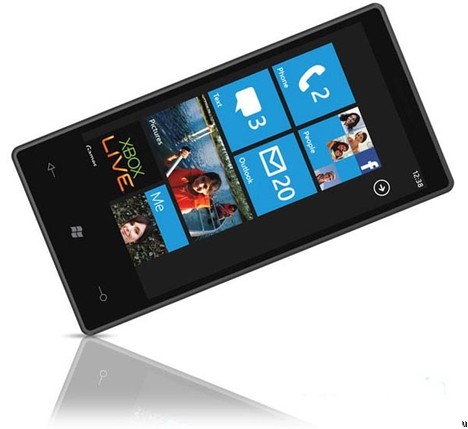
Within the last few months the BlackBerry Torch, the Windows Phone 7 and the Nokia N8 have been launched to the general public. All three phones are designed to eat into the dominance of Apples iPhone and Google’s Android platform and the question is whether any of the three will be successful enough to make inroads against the might of Apple and Google.


Phone 7

Phone 7

From a business perspective, both Microsoft and Nokia have been historically strong but their market share have weakened lately, however RIMs BlackBerry devices have seen continued success within the business market – their Smartphones are outselling others in the business space.

Many business people do question whether an employee needs a BlackBerry phone to try and compete with their personal iPhone or Android as typically businesses want their Smartphones to access to their business applications on the move, great battery life, ease of use and reliability of the phone in general. Currently it seems that the smarter the phone the poorer the battery.

In fact, all three phones (Nokia N8, Windows Phone 7 and BlackBerry Torch) do have something in common: their new features and capabilities are primarily designed to attract consumers away from iPhone and Android and extending their business specific capabilities seems to be second place with more modest changes apparent in all three devices.

The iPhone and Android went the other way first by launching consumer devices and later adding business capabilities.

Granted, the Windows Phone 7 will be able to edit SharePoint (Microsoft’s web portal technology) documents on the fly but there is no Unified Communications software capability for Microsoft’s own Unified Communications products currently available. However, my spies at Redmond tell me this is scheduled for this year – along with multi-tasking and some other great features.

Windows Phone 7 may not quite be the finished article, but it is innovative, fresh and a great new Smartphone start for Microsoft.

In fact, most of the new features of this phone are around consumer multi-media capabilities and consumer software applications linking the phone with Microsoft Live Microsoft’s consumer web platform – pointing to Microsoft’s firm belief of the Consumerisation of IT where home and work software is shared on the same hardware – be it Smartphone or Computer. Because of this, most of the new features are heavily skewed to consumer activities as opposed to business ones.

The Nokia N8 is powered by the new Symbian 3 software and does have the Unified Communications software pre-installed which is a boon for businesses wanting to use Microsoft’s Unified Communications Technology and also has improved multi-tasking, however, many of the new capabilities are targeted at the consumer such as improved graphics, multi-point touch and multiple home screens.

The BlackBerry Torch 9800 runs the new OS 6 and again has many improved consumer features such as an improved 5MP camera and integrated social networking and although it features a slide out qwerty keyboard, the touch screen interface features heavily. The jury is out as to whether this device will be the best of both worlds in terms of tactile keyboard and touch screen or whether it will end up as the jack of all trades – time will tell, but given the vast amount of TV Advertising being thrown at the Torch by RIM – it is sure to sell in volume.

It will be interesting to see whether the power of Apple’s iPhone and Google’s Android brands will win over the new advanced features of these three new devices.

As far as the next killer mobile application – it may well be video conferencing but currently there are very few Smart Phones on the market that support this feature and more importantly no UK Mobile networks can reliably carry a video call over 3G.

So it seems that Smart Phones have caught up with the current capabilities of the mobile networks and until 4G networks are launched we may find that real-time applications such as Voice over IP and video calling are confined to company wireless LANS.

My Top 12 Business Technology Bets for 2011

As we enter 2011 with optimism and trepidation in equal measure, it is clear that the number one objective for many small and medium sized businesses will simply be survival.

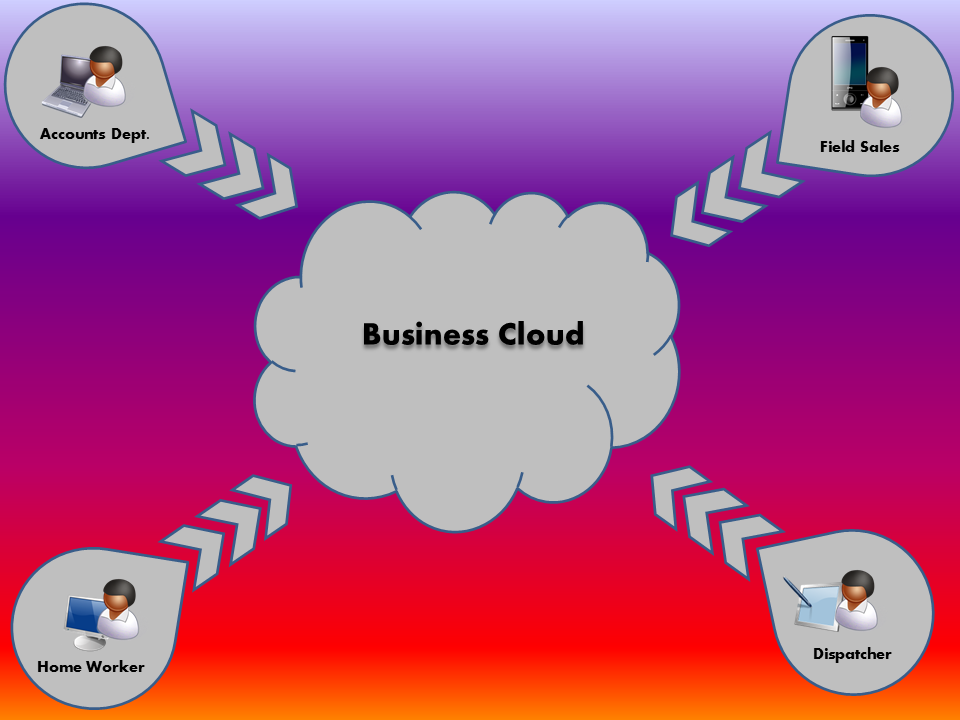
2011 will also undoubtedly be the year of the Cloud. The cost reduction that Cloud Software Technology can bring to businesses will mean that it will become main-stream in many counties and in many business sectors.

However, for businesses deploying Cloud, the story doesn’t stop there. For Cloud software technology to become breakthrough in terms of business productivity gains and cost reduction we also need new types of end user devices that are optimised to work with the cloud.
Business and The Cloud

Therefore my top 12 business technologies for 2011 will be focused on not only Cloud Software Technology but also the hardware devices that connect users to it.

Cloud Software Technology Bets

Communication Technology:

1) Microsoft Lync – The new Unified Communication Service from Microsoft will enable Businesses to communicate more effectively by introducing voice, video and virtual meetings using software powered from the cloud.

2) Hosted IP PBX & SIP Trunking – Various service providers are now selling phone systems as a service through the Cloud; this gives companies a more cost effective way to deploy telephone systems and makes connecting home workers a snap. Sip Trunking is a very low cost alternative to the traditional telephone line, SIP Trunking gives businesses a way to circumvent traditional Telco’s using their computer network instead. Cost savings can be up to 40% savings on line rental and call costs. SIP Trunking is usually deployed as a Cloud Service.

CRM (Customer Relationship Management) Technology:

3) Microsoft CRM 2011 Online – The latest release of Microsoft’s customer relationship software is designed to give businesses – small and large a complete system to optimise their sales, support and marketing functions saving money and improving the customer experience. This new version is available through various cloud services – including Microsoft’s own.

Collaboration, Analytics and Workflow Technology:

4) Microsoft SharePoint 2010 – This software allows businesses to share and collaborate using more than a web browser. Customers can create portals and use them to interact with customers, suppliers and employees. SharePoint also contains powerful workflow and reporting tools giving businesses more streamlined processes and giving them deeper insight into their business operations.

Hardware Virtualisation:

5) Microsoft’s Hyper V Cloud – This software technology allows businesses and service providers to easily “virtualise” their existing server hardware assets and either consolidate them to fewer servers or move them completely to the cloud. Virtualisation is really a core technology driving cloud computing and I believe that Hyper V Cloud will make it easier and more affordable for businesses to leverage their existing computer assets. Hyper V Cloud is currently the underdog to VMWare’s ESX product however I think Microsoft will make up substantial ground in 2011.

Business Hardware Technology Bets

Tablet PC Technology:

Apple’s iPAD has become a great success in both the consumer and business space and re-invigorated the Tablet format. My prediction is that 2011 will see a huge advancement for this format with many providers launching their products. My bet will be the tablet market as a two horse race between Apple and Microsoft.

6) Microsoft Tablet OS – The rumours are that Microsoft is readying a new tablet PC operating system. I suspect this to be true and would hedge a bet that it will be based on the recently launched Windows Phone operating system as it is more uncluttered than the PC based Windows for touch screen usage.

7) Apple iPAD 2 – building on the success of the first iPAD, Apple will surely launch the second version of their tablet and I expect this to include video conferencing as standard – a boon for business.

8 ) Android Tablet – numerous Tablet devices powered by Android are expected to launch in early 2011 including the Cisco Cius, Vizio, Toshiba and rumours are that HTC will be launching a unit called Scribe this year.

Smartphone Technology:

Smartphone use will continue to increase in business and I suspect their “dumb” phone equivalents will slide into oblivion within the UK business space by the end of 2011 or early 2012. The current UK market for “dumb” phones exists because of their low price and manufacturers like Nokia are bringing up the rear with ultra-low cost Smartphones (~£100) so there is really no reason to give an employee a dumb phone anymore.

9) Apple iPhone – The iPhone will continue to make progress in the Business space, driven by the application availability and the new multi-tasking capability.

Google’s Android – The Android platform will continue to go from strength to strength in the consumer space and 2011 will see the platform make substantial ground within the business space.

11) RIM’s BlackBerry – despite the talk of RIM suffering from the influx of devices from Google and Apple, the BlackBerry has gone from strength to strength in 2010 in the business space. Providing RIM can keep the innovations coming through, then I believe they will continue to prosper in the business smartphone space.

12) Windows Phone – Microsoft released its new phone operating system in 2010 and despite the naysayers, it was really quite good for version 1, if not the finished article. I expect the update to be released in the first half of 2011 which will include back-grounding of applications, interface improvements (including cut and paste) and some new applications such as a mobile Lync client (see Microsoft Lync above).  The remaining Achilles heal will be the available Windows Phone applications – currently a shadow of the AppStore, however Microsoft has huge resources at its disposal to rectify this situation so I expect this platform to prosper in the medium and long term.

My Top 5 Technology Products for 2010

2010 was an interesting year for IT and Telecoms technology. The realisation and general acceptance that Cloud as a Technology was here to stay has created some interesting propsitions in 2010 and this will follow through to 2011.

It’s about client (laptop, tablet, smartphone) connecting to the cloud software service. So with this in mind, I have compiled my top 5 technology products for 2010.

Apple’s iPAD must be on this list as it has single handily revived the Tablet form factor. The amazing thing is that it was primarily not as a corporate device however
businesses have been quick in embracing this consumer device, showing the consumerisation of IT at play here. The war of the Tablet’s is yet to play out, but 2011 will be the year to decide the winners and losers. Still with Apple, the launch of the utterly gorgeous MacBook Air shows just how far ahead Apple are in terms of hardware design.

Microsoft’s Phone 7 should be worthy of a mention, it’s a great phone and even though it has come in late to the party and has a few niggles (backgrounding), it should compete successfully with RIM, Apple and Android in both consumer and the business space providing Microsoft improves the quality and quantity of apps available in the Zune Market Place.

While on the Microsoft theme, the launch of Microsoft Lync 2010 Server should see Unified Communications come to the main stream and I’d even go further and say that this technology will be instrumental in re-defining business communications in the coming years plus further increasing the convergence in the IT and Telecoms sectors (Lync is also a PBX).

Microsoft’s Virtualisation technology Hyper V is now catching up with its competition – VMware – and their automated virtualisation platform called Dynamic Data Centre shows just how serious Microsoft are to win in this space giving service providers a fully automated and self-healing cloud platform.  We will see a number of Cloud providers launching DDC services in 2011 including Outsourcery.

Cloud Safety – Are Cloud Services secure Enough for Business Use?

SMB’s who are thinking about embracing the Cloud as their cores IT strategy have a number of concerns.  The main concerns centre around service reliability, accessibility and security of data stored in the Cloud and I will cover the security element in this article.

Firstly let’s agree that there are numerous types of Cloud Service and I will be talking about two types:

SaaS (Software as a Service) – a multi-tenant Cloud service and vDedicated Cloud Servers – one or more virtualised dedicated server operating and managed in the cloud.

SaaS provides business end users with a low cost software service provided on an OPEX or rental model. With SaaS the computer hardware (physical or virtualised) is spread across all of the users that use the SaaS service.  Each user belongs to a specific Organisation and cannot access or see other users from other Organisations even though they all reside on the same platform. When services require data access and storage they utilise SQL databases – such as Hosted CRM and each organisation has a separate database for their data. Because of this each organisation cannot access anyone else’s data even if it is stored on the same physical database server.

vDedicated Cloud Servers are essentially virtual “guest” servers running on a physical “host” server. Each server is its own entity even though many virtual servers (guests) can share the same physical hardware. In other words they cannot access the other virtual servers running on the same host – unless specifically configured to do so.

Real-time Unified Communications services such as the multi-tenant Microsoft OCS or Microsoft Lync provide separation by using “Chinese walls” which are made up of scripts and permission settings that separate users from users within another Organisation preventing cross-organisation contamination of Information.

So if SaaS and vDedicated Cloud Servers are pretty secure, what about customer access security?  Most client access to cloud services are done by using secure web access call https which is usually protected by 128 or 256 bit encryption.

HTTPS is the same security provided to you by the banks when you access your online banking information – so if it is secure enough to protect your private finances it must be secure enough for company data.  However, one area that the online banking is more secure that SMB Cloud Services is the authentication system mechanism used when you log in to their services and I believe this is an area that SMB Cloud Service Providers have some room for improvement.

Users authenticating themselves onto many current SMB Cloud services are required to provide a username and password. Many good Cloud Providers require the users to enter stronger passwords – such as 6-8 minimum chars with at least one number and one capital letter which reduced the risk of password cracking. Also some Cloud Providers require users to change their passwords on a regular basis; however, sometime this can prove more insecure as users tend to write them down rather than memorising them.

There are a large number of solutions to improve authentication security – RSA Smart Tags is one of them and there are many more – it is just a question of Cloud Providers implementing them – which they will do if they see a demand from customers.

Finally, over the last 15 years of providing IT solutions to SMBs, I have come across many shamelessly insecure on-premise IT implementations that could have been easily hacked and data stolen. The reality is that SMBs do not have, or rarely can afford the type of expertise required in order to fully secure their IT assets.

At least Cloud Service Providers will now share a large part of the responsibility of data security with the SMB and this is a good thing – because Cloud Service Providers are in a far better position (technically and procedurally) to provide businesses with secure access to their vital data.

BT Infinity is launched and the Rural Broadband Divide widens once again.

Old Bike or Rural Broadband Speed ?

Old Bike and Rural Broadband Speed

The country is waking up to the news that BT is finally rolling out their 50MB fibre-optic broadband product called BT Infinity and Virgin announce their 100MB service. The consumers and businesses located in major towns and cities should be jumping with joy at the prospect of super-fast broadband at their home or business whilst those that live in a rural area sigh once again at the prospect of the digital divide widening even further. Rural areas will be stuck on 2MB max download and the rest of the country  on 8MB and soon rising to 100MB.

I’m speaking from experience as I live (and built several businesses)  within a rural area of Warwickshire, 10 miles from Leicester but within the BT exchange reach of a delightful but very small market town.

The broadband here is woeful and indicative of other rural areas; the best connectivity available at 2MB download but most broadband delivers between 400 and 800kb download (my own ADSL runs at 600kb).

I personally know of a number of businesses that moved from my rural area to Leicester simply because of the connectivity problems associated with a rural area – two of these businesses were my own and there are countless more across the country.

Unfortunately this is an issue that won’t be solved without radical thinking as it’s a question of economics not technology.

For the likes of BT or Virgin to roll-out fibre to small rural areas is prohibitively expensive and actually not viable in some areas as rural properties mostly have the BT lines going straight back to an exchange and not through a street side cabinet. Many of the actual copper wires are too long to support high speed broadband.

The fact is that high speed broadband is becoming more and more vital for consumers and businesses and this doesn’t change whether you live and work in a rural area or city – it’s still critically important.

Therefore the issue must be solved if we are to finally close the digital divide, stop people and businesses migrating needlessly to cities, and finally create equal and fair access to high speed broadband for all.

There are options; the first was mentioned in one of my previousarticles that centred on a Broadband Grant System giving subsidies to businesses who order more expensive private circuits. Unfortunately there seems to be little appetite for the government to shell out money for this system given the current austerity measures being rolled-out.

However, there is a second way to deliver fast broadband to rural areas without requiring government subsidies. This plan involves two parts;

Firstly, BT launched a new product available under their LLU (local loop unbundling) program. This new product simply consists of a discounted bundle of 4 or 8 copper LLU lines – something that can be accomplished by them quite easily. Once these bundled lines are available for a lower cost, an LLU provider (or indeed BT themselves) could combine the bandwidth’s across these lines to present the end user a single broadband connection with 4 or 8 times the bandwidth of a single ADSL which would equate to approx. 10meg connection or on a very long distance a minimum of 4meg download which is significantly better than the 500kbs achieve today on long distance rural connections.

Secondly, BT making available a discounted backhaul link for LLU providers. This fibre link would allow the LLU provider to connect the local rural exchange back to their network (usually in London) for a discounted rate.

Together these two elements would enable every ISP to deliver rural high speed broadband services whilst making money in the process which would encourage ISPs to deliver without having to incur the costly expense of digging up roads and laying fibre.