
Dynamics CRM 2011 Online Launches – Opportunity or Threat for Dynamics Hosting Partners?

Microsoft launched their CRM 2011 Online offering in the 18th of January 2011 giving customers worldwide the ability to rent and host their CRM Dynamics applications directly with Microsoft.

Some naysayers and sabre rattlers talk of Armageddon for the CRM Hosting Community and in doing so display their complete lack of understanding of the complex and individual requirements of customers, the capabilities of the hosting providers, their routes to market, and the most importantly the Dynamics business space in general.

To a misinformed few, the belief is that every time a major Microsoft Online launch happens – across its hosting products, any hosting company providing a similar product will be blasted into oblivion.

As CTO of Outsourcery (one of the world’s leading Hosted CRM Providers) and the architect of its product strategy, I think it’s a good time to speak from a service provider perspective; specifically on the launch of CRM Online and discuss the opportunity for service providers like us.

CRM stands for Customer Relationship Management and Customer Relationships encompasses the entire lifecycle of a customer including all interactions – real-time and non-real-time. As business people, we quote, support, sell, market to our customers; but we also talk to them on the phone, meet them, video conference, instant message, and share information with them.

My belief is that CRM technology in general is in a very early stage of development. That withstanding, Microsoft CRM Dynamics is the best CRM technology currently available, helping businesses to streamline their operations and gain greater control of their businesses. However in order to extract the maximum value on a CRM system, we need to cover as many customer interactions in the CRM platform as possible. In order to do this we must integrate with other systems and products; some of them Microsoft, some of them not.

Asking a single Cloud Service provider to integrate a huge variety of products into their CRM offering is an extremely complex task and one which neither Microsoft nor other independent CRM Hosting Providers will deliver tomorrow (or in the next couple of years).

In additional, Customers of scale wanting a CRM deployment in the cloud require heavy customisation and integration of the CRM deployment with other business line applications. Some customer’s require their data to stay within the UK or on a dedicated (not shared) SQL back-end. These types of deployments are more suitable for a DDC deployment and not a Partner multi-tenant or Online deployment.

So is there an opportunity for independent CRM Hosters? Of course there is. Do they need to differentiate?  Of course they do,  what business doesn’t? However, the market opportunity for CRM is enormous as collectively, hosting and on-premise businesses have barely scratched the surface with deployments. What the CRM Online launch does achieve is to give more credence to the hosting or cloud model, be it Microsoft Online or Partner Hosted, something which it has previously lacked.

The real opportunity for CRM hosters is the ability to offer “the power of choice” – Same core CRM product but different deployment options depending on customer circumstance. Soon even a hybrid model will be possible where some users are on MS Online and some on partner hosted – all within the same Organisation.

This is why Outsourcery has chosen an infrastructure agnostic model – same core technology but different deployment options giving customers the power of choice. Outsourcery believes that Cloud is a more efficient distribution model when used at scale – let the internet deliver the software rather than a courier – it’s cheaper for everyone that way.

So what is the real threat to Microsoft CRM hosters’? I certainly don’t think its Microsoft. To me it’s clear: Salesforce.com – just a pity that point wasn’t picked up by the sabre rattlers!
Smart Phones – Business Critical Convergence

Two Facts: Smartphones are a key component in business productivity and Smartphones are the first truly converged device offering both telephony and software capabilities in a single device.

Given both these facts it is a logical assumption, choosing the correct Smartphone device for your workforce is becoming a critical IT decision.

Historically the company mobile phones were handled by the phone guy, or the telecoms department within an organisation. However because of this convergence, the buying process needs to be treated with the same care and due diligence as purchasing an expensive CRM System.

Within the last few months the BlackBerry Torch, the Windows Phone 7 and the Nokia N8 have been launched to the general public. All three phones are designed to eat into the dominance of Apples iPhone and Google’s Android platform and the question is whether any of the three will be successful enough to make inroads against the might of Apple and Google.


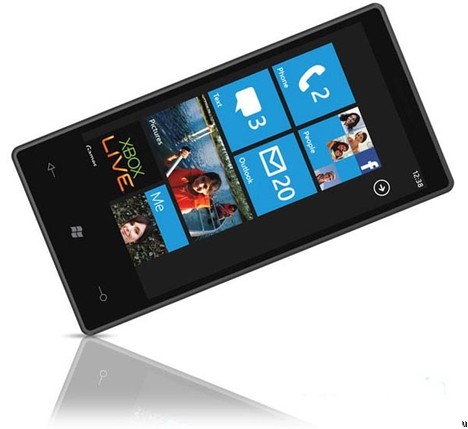
Phone 7

Phone 7

From a business perspective, both Microsoft and Nokia have been historically strong but their market share have weakened lately, however RIMs BlackBerry devices have seen continued success within the business market – their Smartphones are outselling others in the business space.

Many business people do question whether an employee needs a BlackBerry phone to try and compete with their personal iPhone or Android as typically businesses want their Smartphones to access to their business applications on the move, great battery life, ease of use and reliability of the phone in general. Currently it seems that the smarter the phone the poorer the battery.

In fact, all three phones (Nokia N8, Windows Phone 7 and BlackBerry Torch) do have something in common: their new features and capabilities are primarily designed to attract consumers away from iPhone and Android and extending their business specific capabilities seems to be second place with more modest changes apparent in all three devices.

The iPhone and Android went the other way first by launching consumer devices and later adding business capabilities.

Granted, the Windows Phone 7 will be able to edit SharePoint (Microsoft’s web portal technology) documents on the fly but there is no Unified Communications software capability for Microsoft’s own Unified Communications products currently available. However, my spies at Redmond tell me this is scheduled for this year – along with multi-tasking and some other great features.

Windows Phone 7 may not quite be the finished article, but it is innovative, fresh and a great new Smartphone start for Microsoft.

In fact, most of the new features of this phone are around consumer multi-media capabilities and consumer software applications linking the phone with Microsoft Live Microsoft’s consumer web platform – pointing to Microsoft’s firm belief of the Consumerisation of IT where home and work software is shared on the same hardware – be it Smartphone or Computer. Because of this, most of the new features are heavily skewed to consumer activities as opposed to business ones.

The Nokia N8 is powered by the new Symbian 3 software and does have the Unified Communications software pre-installed which is a boon for businesses wanting to use Microsoft’s Unified Communications Technology and also has improved multi-tasking, however, many of the new capabilities are targeted at the consumer such as improved graphics, multi-point touch and multiple home screens.

The BlackBerry Torch 9800 runs the new OS 6 and again has many improved consumer features such as an improved 5MP camera and integrated social networking and although it features a slide out qwerty keyboard, the touch screen interface features heavily. The jury is out as to whether this device will be the best of both worlds in terms of tactile keyboard and touch screen or whether it will end up as the jack of all trades – time will tell, but given the vast amount of TV Advertising being thrown at the Torch by RIM – it is sure to sell in volume.

It will be interesting to see whether the power of Apple’s iPhone and Google’s Android brands will win over the new advanced features of these three new devices.

As far as the next killer mobile application – it may well be video conferencing but currently there are very few Smart Phones on the market that support this feature and more importantly no UK Mobile networks can reliably carry a video call over 3G.

So it seems that Smart Phones have caught up with the current capabilities of the mobile networks and until 4G networks are launched we may find that real-time applications such as Voice over IP and video calling are confined to company wireless LANS.

My Top 12 Business Technology Bets for 2011

As we enter 2011 with optimism and trepidation in equal measure, it is clear that the number one objective for many small and medium sized businesses will simply be survival.

2011 will also undoubtedly be the year of the Cloud. The cost reduction that Cloud Software Technology can bring to businesses will mean that it will become main-stream in many counties and in many business sectors.

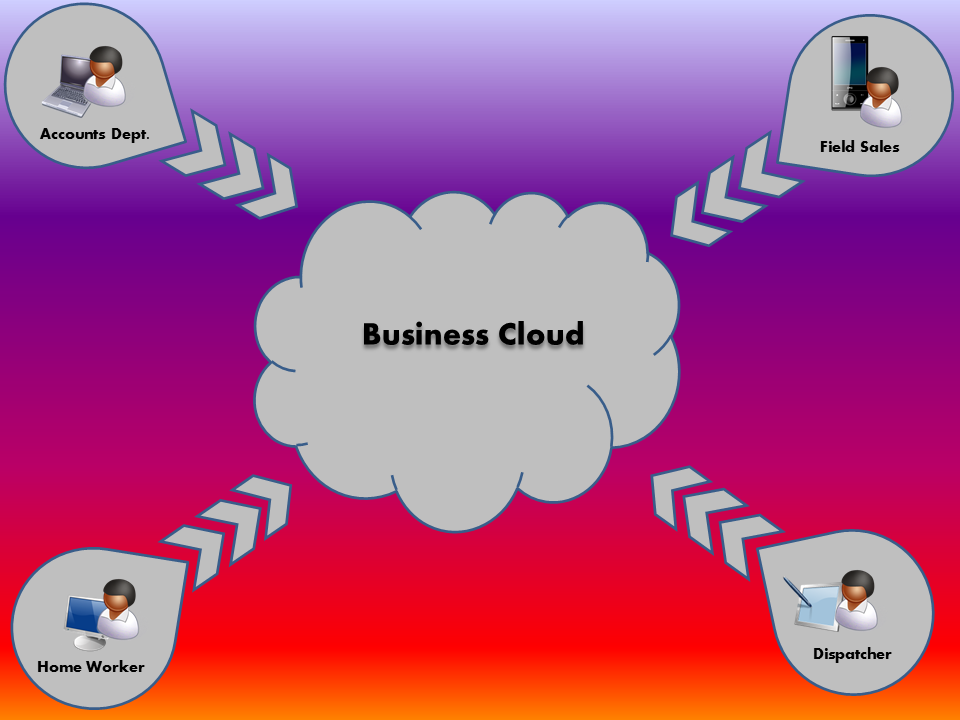
However, for businesses deploying Cloud, the story doesn’t stop there. For Cloud software technology to become breakthrough in terms of business productivity gains and cost reduction we also need new types of end user devices that are optimised to work with the cloud.

Business and The Cloud

Therefore my top 12 business technologies for 2011 will be focused on not only Cloud Software Technology but also the hardware devices that connect users to it.

Cloud Software Technology Bets

Communication Technology:

1) Microsoft Lync – The new Unified Communication Service from Microsoft will enable Businesses to communicate more effectively by introducing voice, video and virtual meetings using software powered from the cloud.

2) Hosted IP PBX & SIP Trunking – Various service providers are now selling phone systems as a service through the Cloud; this gives companies a more cost effective way to deploy telephone systems and makes connecting home workers a snap. Sip Trunking is a very low cost alternative to the traditional telephone line, SIP Trunking gives businesses a way to circumvent traditional Telco’s using their computer network instead. Cost savings can be up to 40% savings on line rental and call costs. SIP Trunking is usually deployed as a Cloud Service.

CRM (Customer Relationship Management) Technology:

3) Microsoft CRM 2011 Online – The latest release of Microsoft’s customer relationship software is designed to give businesses – small and large a complete system to optimise their sales, support and marketing functions saving money and improving the customer experience. This new version is available through various cloud services – including Microsoft’s own.

Collaboration, Analytics and Workflow Technology:

4) Microsoft SharePoint 2010 – This software allows businesses to share and collaborate using more than a web browser. Customers can create portals and use them to interact with customers, suppliers and employees. SharePoint also contains powerful workflow and reporting tools giving businesses more streamlined processes and giving them deeper insight into their business operations.

Hardware Virtualisation:

5) Microsoft’s Hyper V Cloud – This software technology allows businesses and service providers to easily “virtualise” their existing server hardware assets and either consolidate them to fewer servers or move them completely to the cloud. Virtualisation is really a core technology driving cloud computing and I believe that Hyper V Cloud will make it easier and more affordable for businesses to leverage their existing computer assets. Hyper V Cloud is currently the underdog to VMWare’s ESX product however I think Microsoft will make up substantial ground in 2011.

Business Hardware Technology Bets

Tablet PC Technology:

Apple’s iPAD has become a great success in both the consumer and business space and re-invigorated the Tablet format. My prediction is that 2011 will see a huge advancement for this format with many providers launching their products. My bet will be the tablet market as a two horse race between Apple and Microsoft.

6) Microsoft Tablet OS – The rumours are that Microsoft is readying a new tablet PC operating system. I suspect this to be true and would hedge a bet that it will be based on the recently launched Windows Phone operating system as it is more uncluttered than the PC based Windows for touch screen usage.

7) Apple iPAD 2 – building on the success of the first iPAD, Apple will surely launch the second version of their tablet and I expect this to include video conferencing as standard – a boon for business.

8 ) Android Tablet – numerous Tablet devices powered by Android are expected to launch in early 2011 including the Cisco Cius, Vizio, Toshiba and rumours are that HTC will be launching a unit called Scribe this year.

Smartphone Technology:

Smartphone use will continue to increase in business and I suspect their “dumb” phone equivalents will slide into oblivion within the UK business space by the end of 2011 or early 2012. The current UK market for “dumb” phones exists because of their low price and manufacturers like Nokia are bringing up the rear with ultra-low cost Smartphones (~£100) so there is really no reason to give an employee a dumb phone anymore.

9) Apple iPhone – The iPhone will continue to make progress in the Business space, driven by the application availability and the new multi-tasking capability.

Google’s Android – The Android platform will continue to go from strength to strength in the consumer space and 2011 will see the platform make substantial ground within the business space.

11) RIM’s BlackBerry – despite the talk of RIM suffering from the influx of devices from Google and Apple, the BlackBerry has gone from strength to strength in 2010 in the business space. Providing RIM can keep the innovations coming through, then I believe they will continue to prosper in the business smartphone space.

12) Windows Phone – Microsoft released its new phone operating system in 2010 and despite the naysayers, it was really quite good for version 1, if not the finished article. I expect the update to be released in the first half of 2011 which will include back-grounding of applications, interface improvements (including cut and paste) and some new applications such as a mobile Lync client (see Microsoft Lync above).  The remaining Achilles heal will be the available Windows Phone applications – currently a shadow of the AppStore, however Microsoft has huge resources at its disposal to rectify this situation so I expect this platform to prosper in the medium and long term.