
BT Infinity is launched and the Rural Broadband Divide widens once again.

Old Bike or Rural Broadband Speed ?

Old Bike and Rural Broadband Speed

The country is waking up to the news that BT is finally rolling out their 50MB fibre-optic broadband product called BT Infinity and Virgin announce their 100MB service. The consumers and businesses located in major towns and cities should be jumping with joy at the prospect of super-fast broadband at their home or business whilst those that live in a rural area sigh once again at the prospect of the digital divide widening even further. Rural areas will be stuck on 2MB max download and the rest of the country  on 8MB and soon rising to 100MB.

I’m speaking from experience as I live (and built several businesses)  within a rural area of Warwickshire, 10 miles from Leicester but within the BT exchange reach of a delightful but very small market town.

The broadband here is woeful and indicative of other rural areas; the best connectivity available at 2MB download but most broadband delivers between 400 and 800kb download (my own ADSL runs at 600kb).

I personally know of a number of businesses that moved from my rural area to Leicester simply because of the connectivity problems associated with a rural area – two of these businesses were my own and there are countless more across the country.

Unfortunately this is an issue that won’t be solved without radical thinking as it’s a question of economics not technology.

For the likes of BT or Virgin to roll-out fibre to small rural areas is prohibitively expensive and actually not viable in some areas as rural properties mostly have the BT lines going straight back to an exchange and not through a street side cabinet. Many of the actual copper wires are too long to support high speed broadband.

The fact is that high speed broadband is becoming more and more vital for consumers and businesses and this doesn’t change whether you live and work in a rural area or city – it’s still critically important.

Therefore the issue must be solved if we are to finally close the digital divide, stop people and businesses migrating needlessly to cities, and finally create equal and fair access to high speed broadband for all.

There are options; the first was mentioned in one of my previousarticles that centred on a Broadband Grant System giving subsidies to businesses who order more expensive private circuits. Unfortunately there seems to be little appetite for the government to shell out money for this system given the current austerity measures being rolled-out.

However, there is a second way to deliver fast broadband to rural areas without requiring government subsidies. This plan involves two parts;

Firstly, BT launched a new product available under their LLU (local loop unbundling) program. This new product simply consists of a discounted bundle of 4 or 8 copper LLU lines – something that can be accomplished by them quite easily. Once these bundled lines are available for a lower cost, an LLU provider (or indeed BT themselves) could combine the bandwidth’s across these lines to present the end user a single broadband connection with 4 or 8 times the bandwidth of a single ADSL which would equate to approx. 10meg connection or on a very long distance a minimum of 4meg download which is significantly better than the 500kbs achieve today on long distance rural connections.

Secondly, BT making available a discounted backhaul link for LLU providers. This fibre link would allow the LLU provider to connect the local rural exchange back to their network (usually in London) for a discounted rate.

Together these two elements would enable every ISP to deliver rural high speed broadband services whilst making money in the process which would encourage ISPs to deliver without having to incur the costly expense of digging up roads and laying fibre.
Business ready and ready for Business The Invasion of the Tablet PCs.

By early 2011 the UK market will be awash with Business Tablets giving much needed competition to Apple’s iPAD. There are at least 10 new tablets coming to market, five for the big brands including – BlackBerry Playbook, Cisco Cius, Avaya Flare, Windows 7 Samsung Galaxy and the HP Tablet.  This clearly shows that the tablet pc format is here to stay, but how will tablets actually improve business performance and which of the Tablet brands will be a long term success in this space?

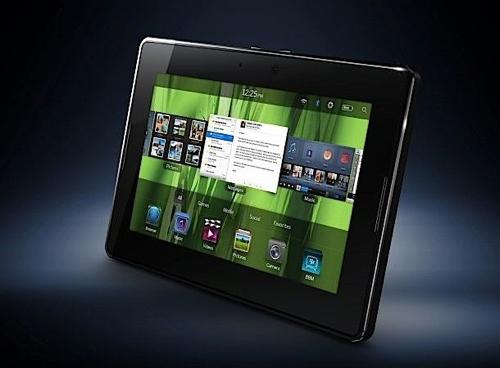
BlackBerry has a premium brand when it comes to business and if the initial specification of the BlackBerry Playbook is to be believed then it should be very popular. Sporting a newQNXoperating system that supports Adobe Flash, HTML5, multi-tasking, Unified Communications in the form of integrated video conferencing, integrated 3G and Wi-Fi and full High Definition video; the Playbook looks seriously fit for purpose. The rumours are that there will be 16GB and 32GB models available at launch.
 

Blackberry Playbook

Blackberry Playbook

Unified Communications also features heavily in the forthcoming Cisco Cius, powered by the Android operating system it offers users video and multi-party conferencing plus a raft of other business features and Cisco’s brand will also play well within the business space.
Like the Cius, the Avaya Flare also uses the Android operating system and again majors on multi-media and Unified Communications, providing the user with High Definition Video Conferencing, Presence and SIP (voice over IP) Telephony and can even support multiple simultaneous conferences.
As a side note, the Android OS is looking more and more flexible these days with smartphones not the only hardware platform it will excel at and shows that Google surely must launch its own Tablet PC soon – or maybe HDC is busy building one as we speak!
Last but certainly not least is the Windows 7 Tablet PC platform and the plethora of manufacturer devices like the Samsung Galaxy and HP Tablet and at least another 5 manufacturers readying their devices within the next few months.
The fact is that the Windows Tablet devices will have a huge tactical advantage in the business space because of Microsoft Office. Used by virtually all businesses, Microsoft Office is the stickiest software suite in history and will be leveraged extensively by Microsoft and its partners to lure the business user with advantages such as document compatibility and the widest integration into Microsoft’s massive software stack.
Extensive integration with applications such as SharePoint, Lync (Unified Communications), CRM and Exchange will no doubt be included from launch giving the platform a head-start.
However there are also big challenges too – can Microsoft improve the usability and user experience of the Windows 7 OS when used with the touch screen interface – something that has caused the company issues in the past with its older Windows Mobile platform and hopefully addressed in the new Windows Phone soon to be launched. So which Tablet will we all end up with?


Currently it’s anyone’s guess – but my Christmas list just got a little bit longer.

The Smart Phone Wars – A New Hope. Will the forthcoming Windows Phone 7, Nokia N8 or the BlackBerry Torch be able to break the iPhone and Android dominance in the Smartphone market ?

Within the next month the BlackBerry Torch, the Windows Phone 7 and the Nokia N8 will be released to the general public. All three phones are designed to eat into the dominance of Apples iPhone and Googles Android platform and the question is whether any of the three will be successful enough to make inroads against the might of Apple and Google.

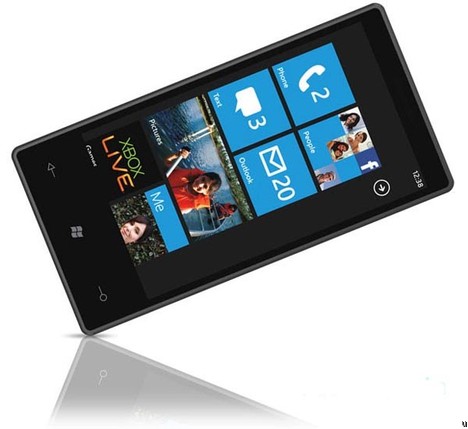
Microsoft Phone 7

Phone 7

From a business perspective, both Microsoft and Nokia have been historically strong but their market share have weakened lately, however RIMs BlackBerry devices have seen continued success within the business market.

Many people do question whether businesses need a BlackBerry phone to try and compete with the iPhone and Android as typically businesses want their Smartphones to access to their business applications on the move, great battery life, ease of use and reliability of the phone in general.

In fact, all three phones (Nokia N8, Windows Phone 7 and BlackBerry Torch) do have something in common their new features and capabilities are primarily designed to attract consumers away from iPhone and Android and extending their business specific capabilities seems to be second place with more modest changes apparent in all three devices. The iPhone and Android went the other way first launching consumer devices and later adding business capabilities.

Granted, the Windows Phone 7 will be able to edit SharePoint (Microsofts web portal technology) documents on the fly but there is no Unified Communications software capability for Microsofts own Unified Communications products available at launch. In fact, most of the new features of this phone are around consumer multi-media capabilities and consumer software applications linking the phone with Microsoft Live Microsofts consumer web platform.

The Nokia N8 is powered by the new Symbian 3 software and does have the Unified Communications software pre-installed which is a boon for businesses wanting to use Microsofts Unified Communications Technology and also has improved multi-tasking another business feature, however many of the new capabilities are targeted at the consumer such as improved graphics, multi-point touch and multiple home screens. The

BlackBerry Torch 9800 runs the new OS 6 and again has many improved consumer features such as an improved 5MP camera and integrated social networking and although it features a slide out qwerty keyboard, the touch screen interface features heavily.

It will be interesting to see whether the power of Apples iPhone and Googles Android brands will win over the new advanced features of these three new devices.